
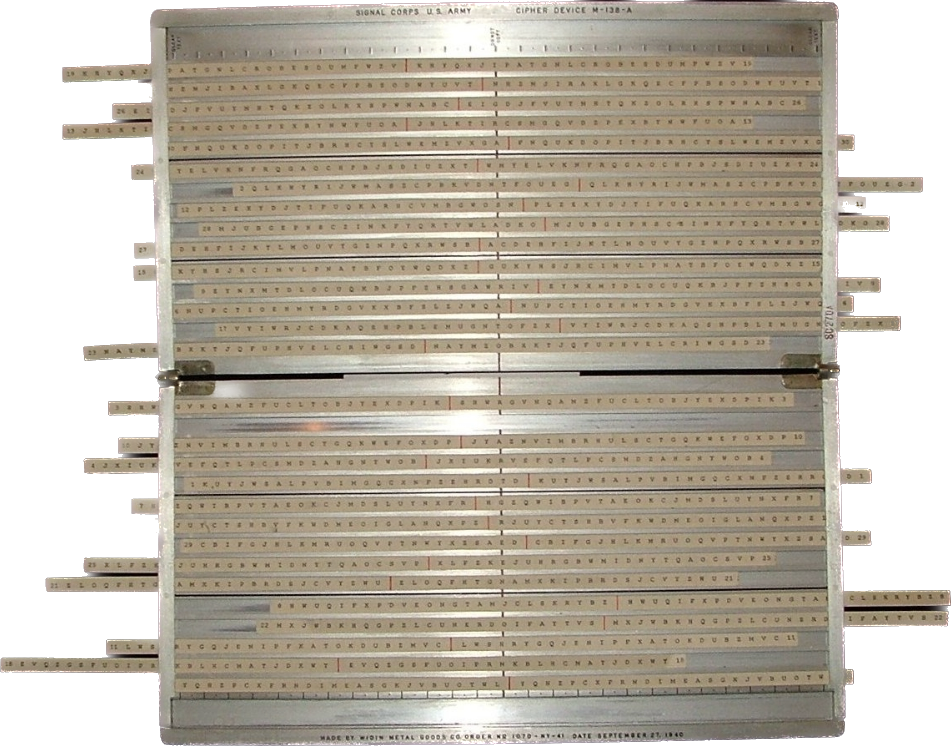
The M-138 and M-138A were cipher devices used by the U.S. Army between 1934 and 1944 as an evolution and flat version of the M-94.
They consisted of a frame, usually made of aluminium (see History) with a ruler and channels in which paper or plastic strips, each bearing a different alphabet repeated twice, could slide.
The M-138 had a flat, one-piece aluminium frame with 25 channels.
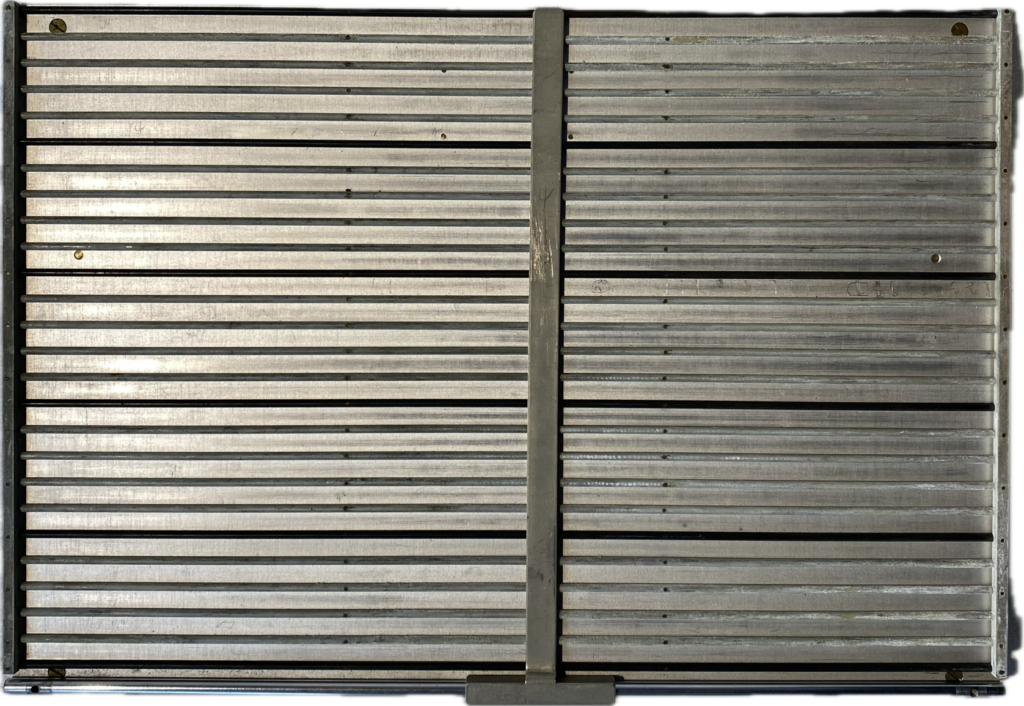
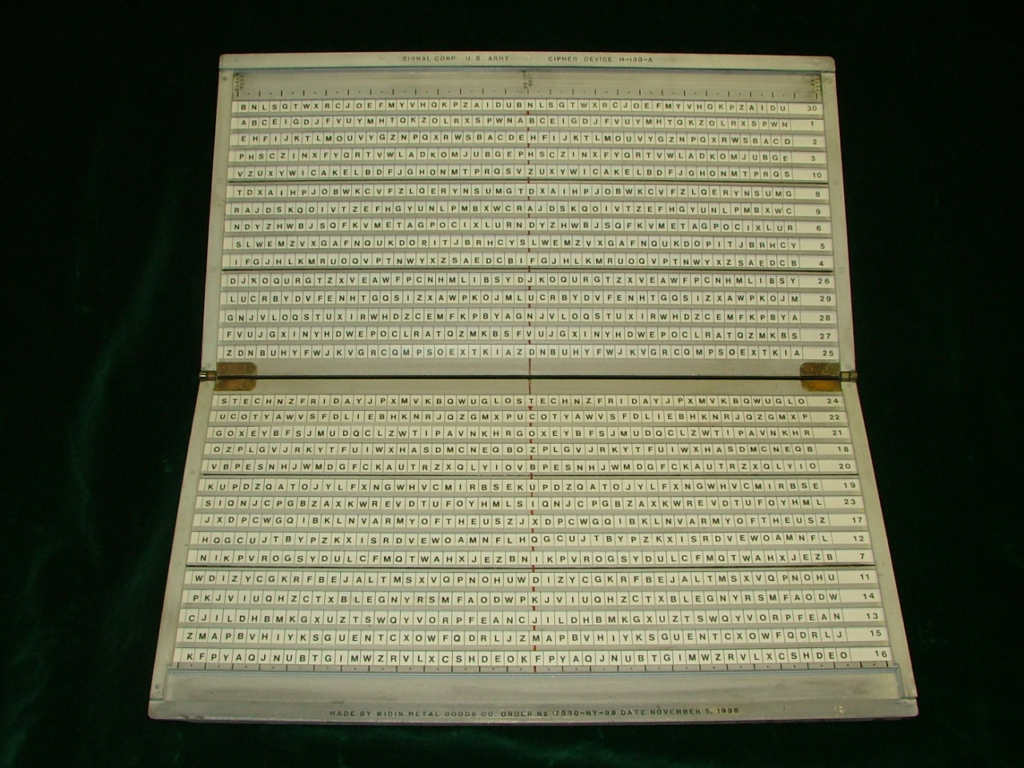
The M138-A had an hinged aluminium frame, with 30 channels.
Use
Both devices are used the same way.
If the text is longer than the number of channels of the device, it must first be broken in 25 or 30-letter sections (for M-138 and M-138-A, respectively) then the enciphering or deciphering process is performed for each section.
Each section may be enciphered with a different key, or with the same, the latter being much less secure.
To encipher
The strips are inserted into the channels in the order given by the key.
The strips are slid to make the plaintext appear either at the first or last column (on the M-138-A, both are marked “CLEAR TEXT”).
The ciphertext is read off any other column except the center one (which reads “DO NOT COPY” on the M-138-A) as it also bears the clear text.
To decipher
The procedure is the same; the strips are inserted according to the key and aligned so the cipher text appears at the leftmost or rightmost column.
The columns are scanned to fin the one with readable text.