Genesis of the M-138
In the 1920 and early 1930s, the field cipher device widely used by the U.S. Army was the M-94. However, its alphabets were stamped on aluminium discs which could not readily be replaced.
Late in 1933 the Army, recognizing the added security of being able to easily change alphabets, devised plans for a replacement device.
Several systems were designed:
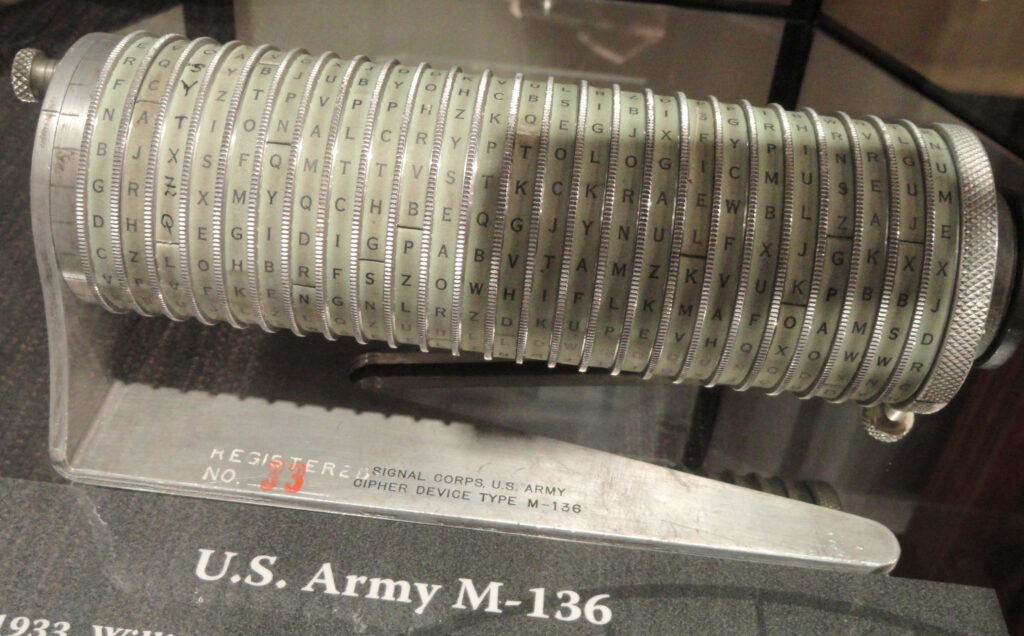
- The M-136, invented by William F. Friedman, was a cylindrical device similar to the M-94 with 25 discs but with alphabets printed on papers strips attached around the discs. This device turned out not to be practical and only one model was ever built.
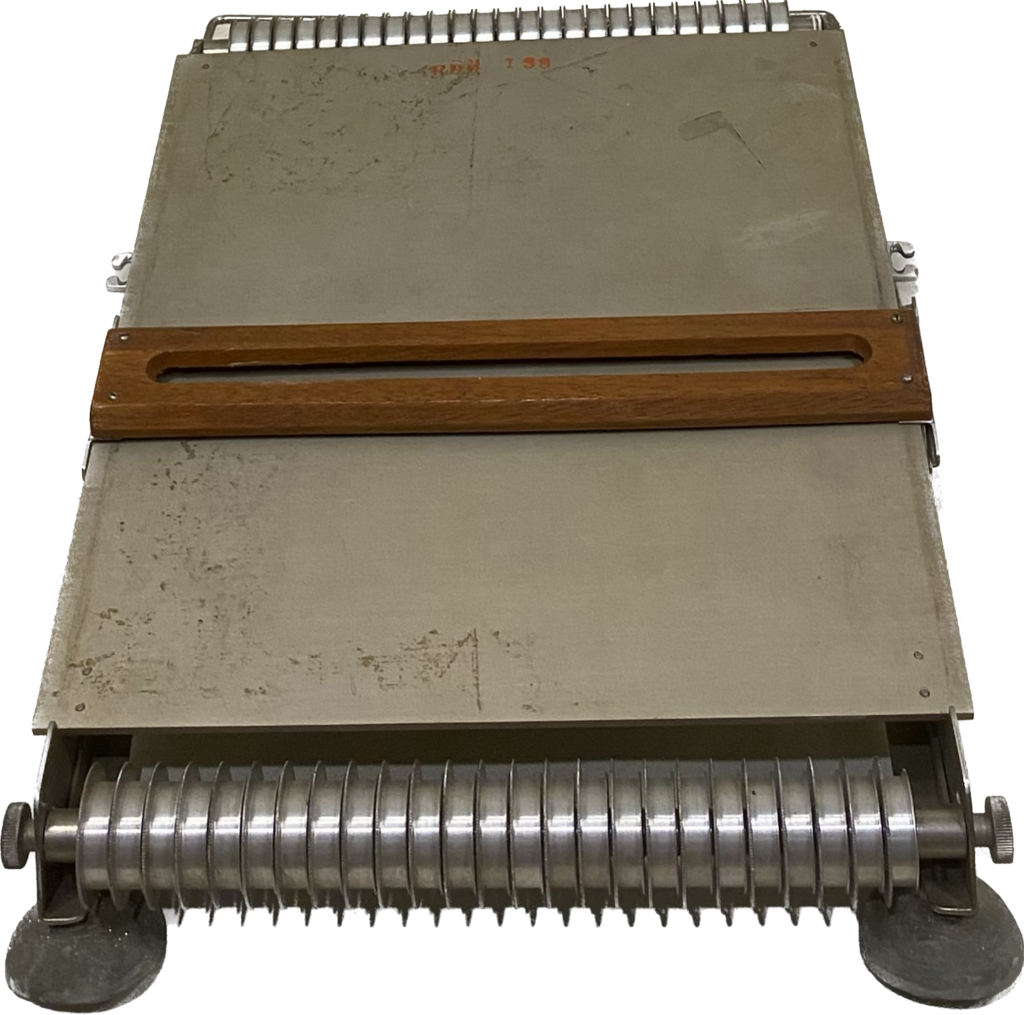
- The M-137 was invented by U.S. Navy Lieutenant Smellow. It was a board, supported at 45° by a frame, on which paper strips slide in an endless loop. It was used by the Navy for 3 years.
- As these were unsatisfactory for the Army 3 experimental models (M-138-T, M-138-T2, and M-138-T3) were designed based on a strip cipher device invented in 1915 by U.S. Army Captain Parker Hitt, and tested simultaneously.
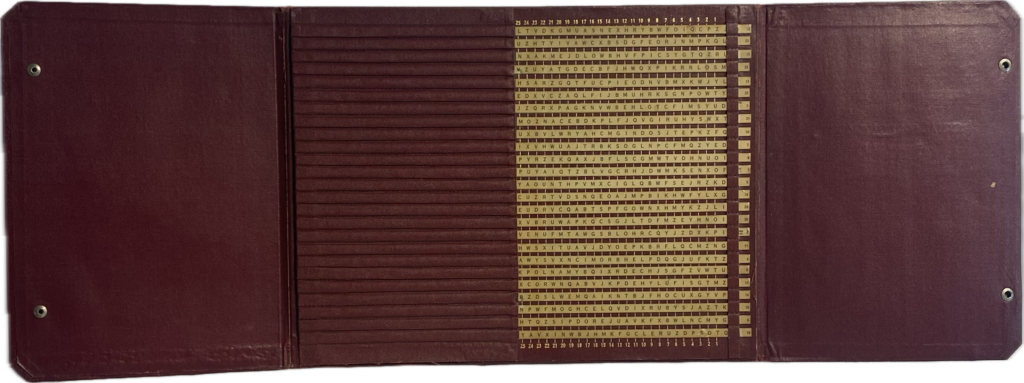
- M-138-T2, found to be the most satisfactory, was refined into M-138-T4 (no M-138-T2 remains, as they literally became the M-138-T4).
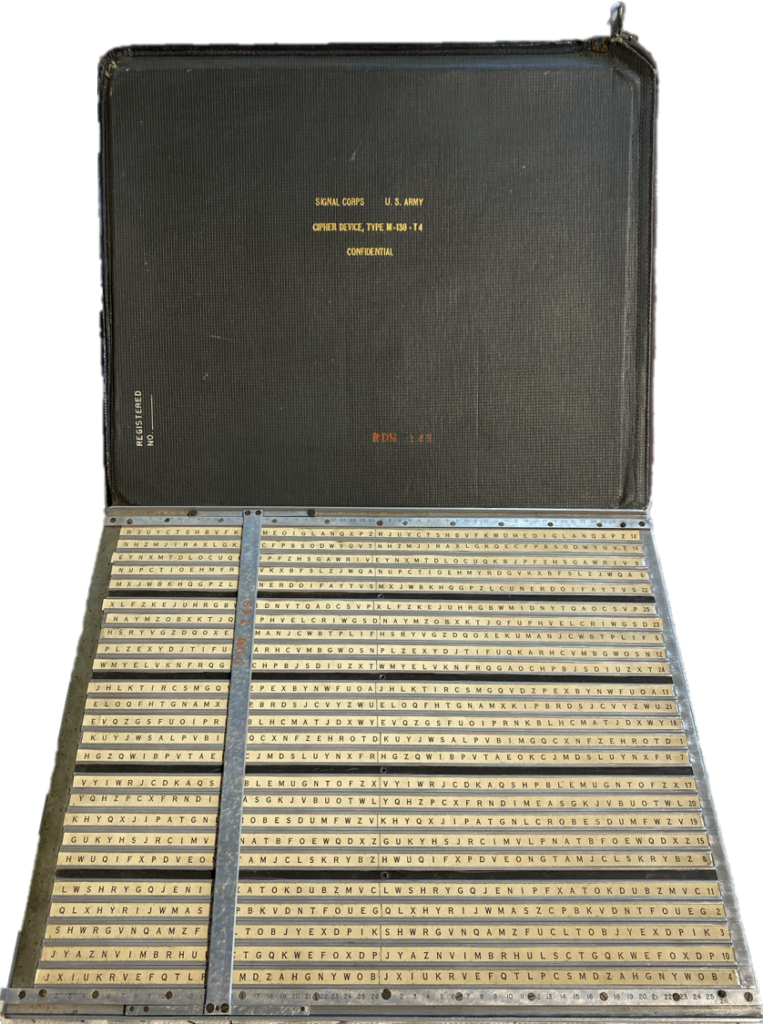
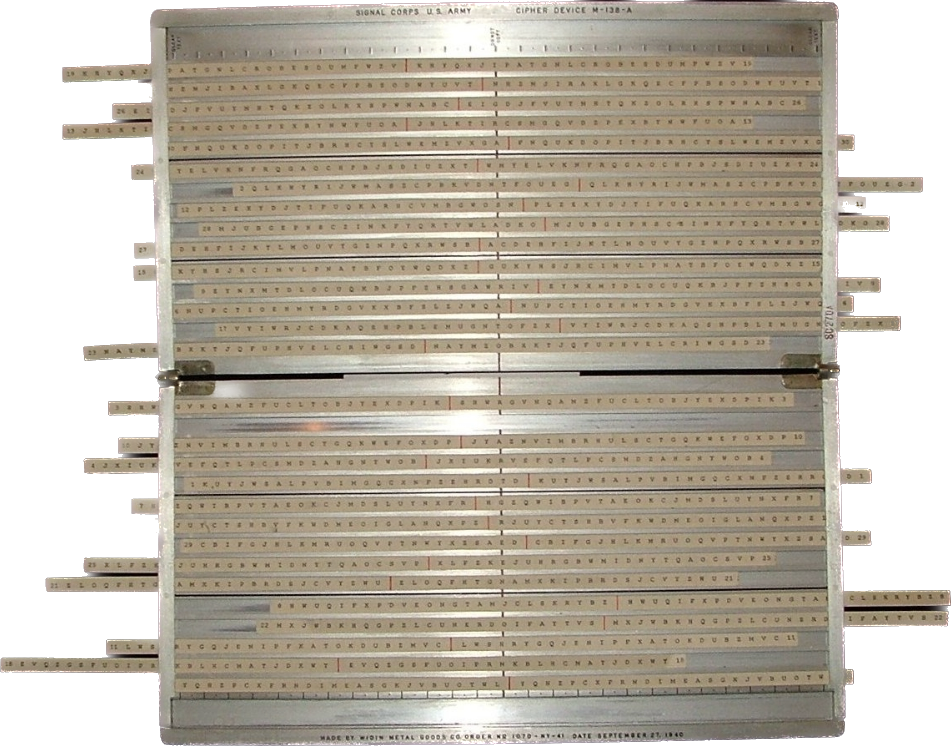
M-138-T4 was further refined by the Navy and, as the M-138, was approved in August 1934 and became the first strip cipher used by the U.S. Army. The first units were ordered in January 1935.
The M-138-A
Quickly problems were reported with the M-138 —paper strips were getting stuck in the channels, due to the cylindrical shape of the rods creating the channels— and in November 1936 work was started on modifications.
The new version, M-138-A, was tested in 1938 and production started in 1939.
In 1942, as mass production was about to begin, a shortage of aluminium forced the Army to substitute the M-138-A.
As the Navy had a plastic version of the M-138-A, the CSP-485, the Army purchased 5,000 units. These were found not practical, as the board warped in tropical climates.
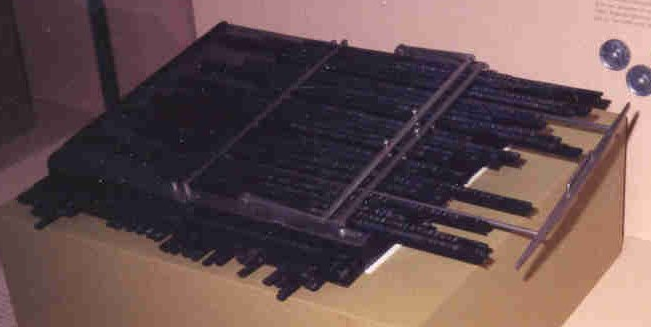
The Army thus had to send the existing aluminium devices (from the continental U.S.) overseas where the conditions were the worst, and made wooden versions, called SIGWOWO, for the continental U.S.
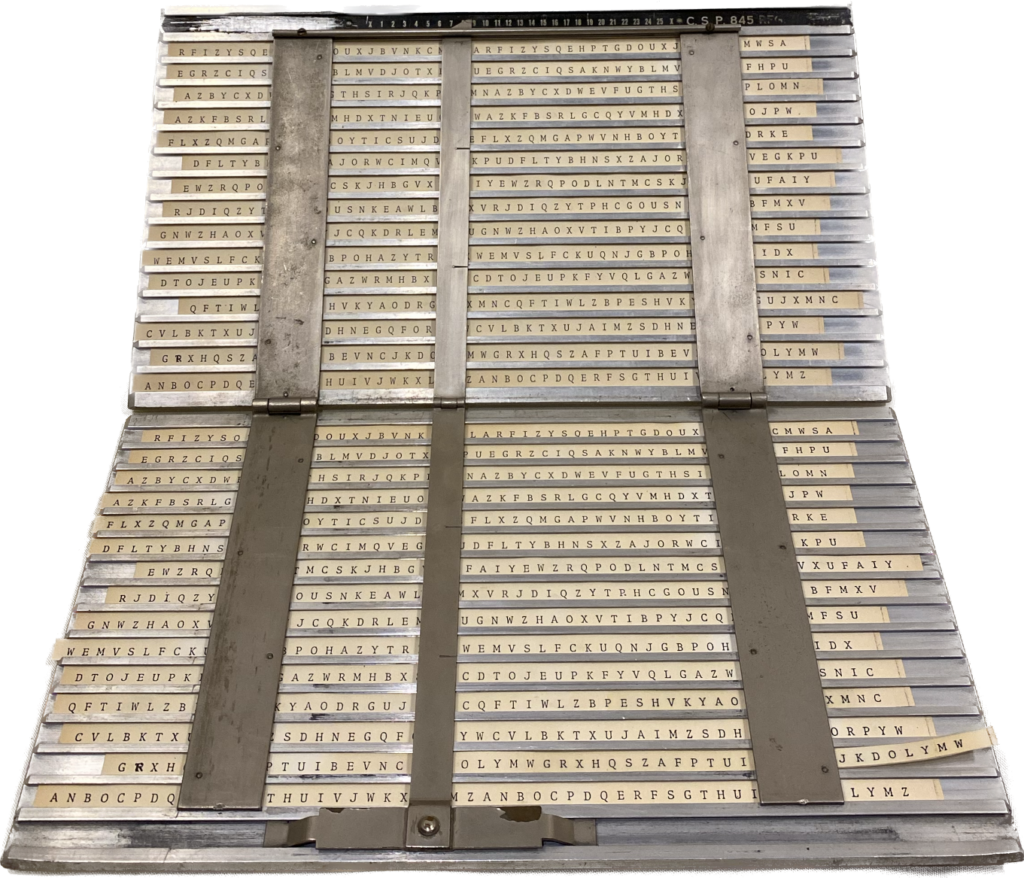
When the aluminium shortage ended production of metal devices could resume; all previous devices (M-138, M-138-A, SIGWOWO, plastic CSP-845) were declared obsolete, recalled, and replaced with metal CSP-845.
(For a broader history of strip and cylinder cipher devices, see M-94/History)