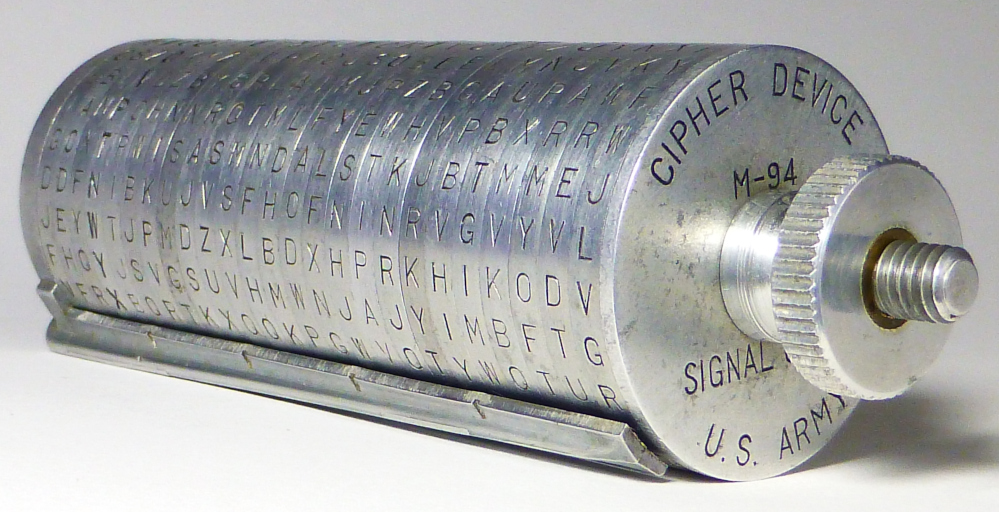
The M-94 device was used by the U.S. Army from 1921 to 1943 and by the Navy (under the name CSP-488) from October 1926 to 1943. The cylinder cipher device type, however, has a much longer and complicated history and was invented independently several times, sometimes as a cylinder device and sometimes as a cryptologically equivalent strip cipher device.
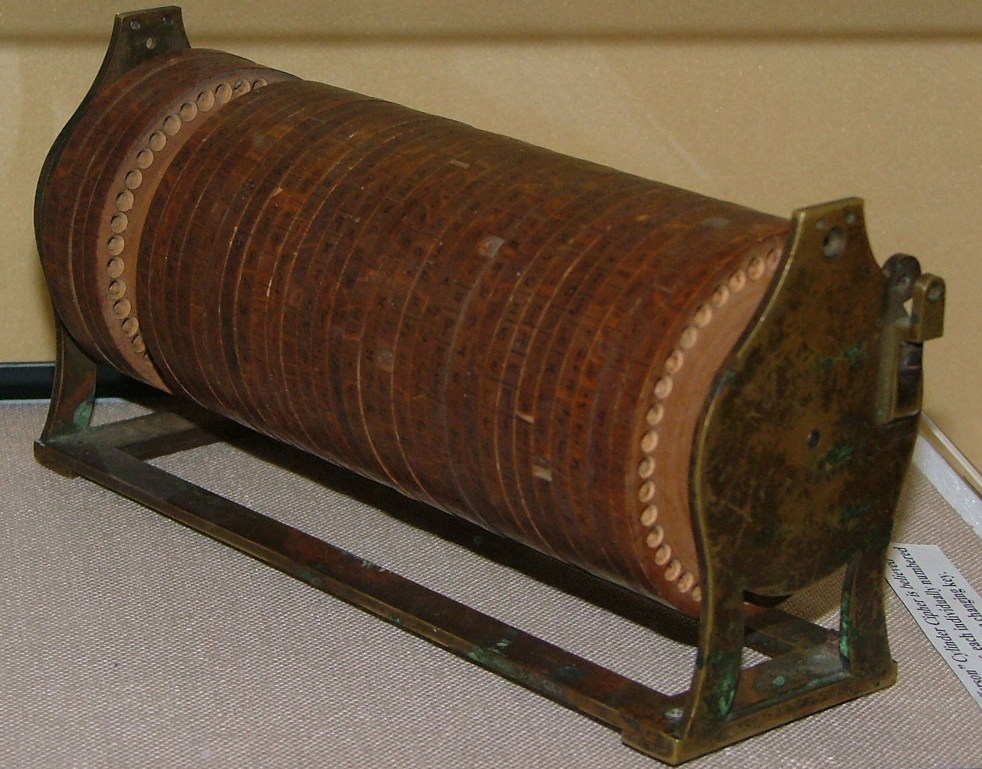
- Thomas Jefferson described the first recorded version of a cylinder cipher device between 1790 and 1800 (though there is no evidence that he invented it, the device is commonly called “Jefferson disc”). The device was made of wood. It had 36 wheels, each 2″ in diameter and 1/6″ thick, on an axle 1/4″ (or 1/8″) in diameter and just over 6″ long. A device similar to this description has been found in 1983, it can be seen at the NSA’s National Cryptologic Museum.
- French cryptanalyst Etienne Bazeries invented in 1891 a device with 20 discs engraved with 25-letter alphabets, and unsuccessfully proposed it to the Army. The device was broken by the Marquis de Viaris in 1893.
- U.S. Army Colonel Parker Hitt invented a cylinder device in 1912 as a means to ease the deciphering of ciphertext produced with the Army cipher disc. The device only had regular and reversed alphabets, but Hitt proposed it could be used with mixed alphabets.
- Hitt invented in 1915 a strip cipher device with mixed alphabets which, after refinement by Joseph Mauborgne, would become the cylinder cipher device M-94.
- The M-94 was adopted in 1922 and was declared obsolete and unsafe in 1942. It remained in use, if nothing safer was readily available, until 1943. 9,342 devices were produced.
- In July 1929 William F. Friedman proposed a strip version of the device, which would consist of 25 square (instead of flat) sliding strips with a different alphabet on each face, thus affording a total of 100 alphabets. This device was apparently never produced.
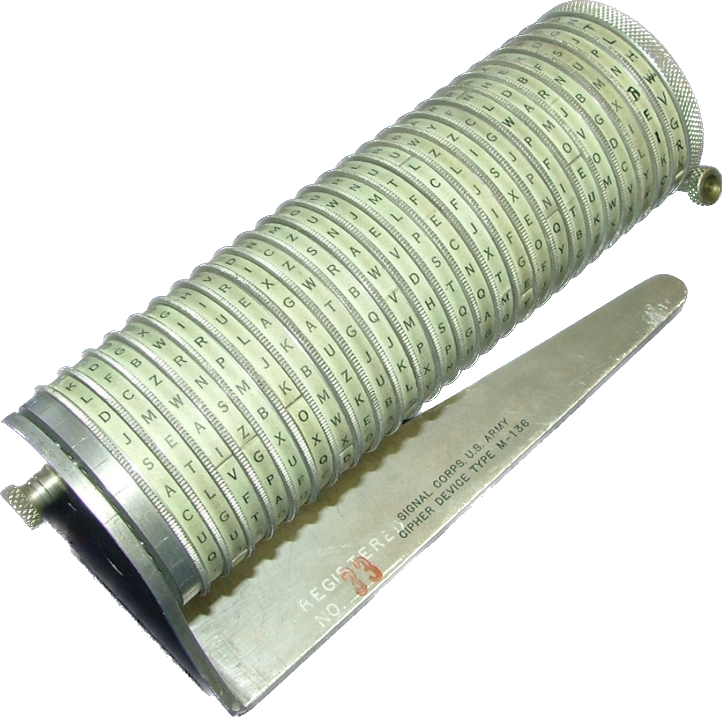
- Still looking to create a device with easily changeable alphabets, Friedman created the M-136 in 1933. A kind of M-94 but with paper alphabets around the discs, the device was never adopted.
- The strip cipher device Hitt invented in 1915 was adopted by the Army in Jully 1934 as the M-138.
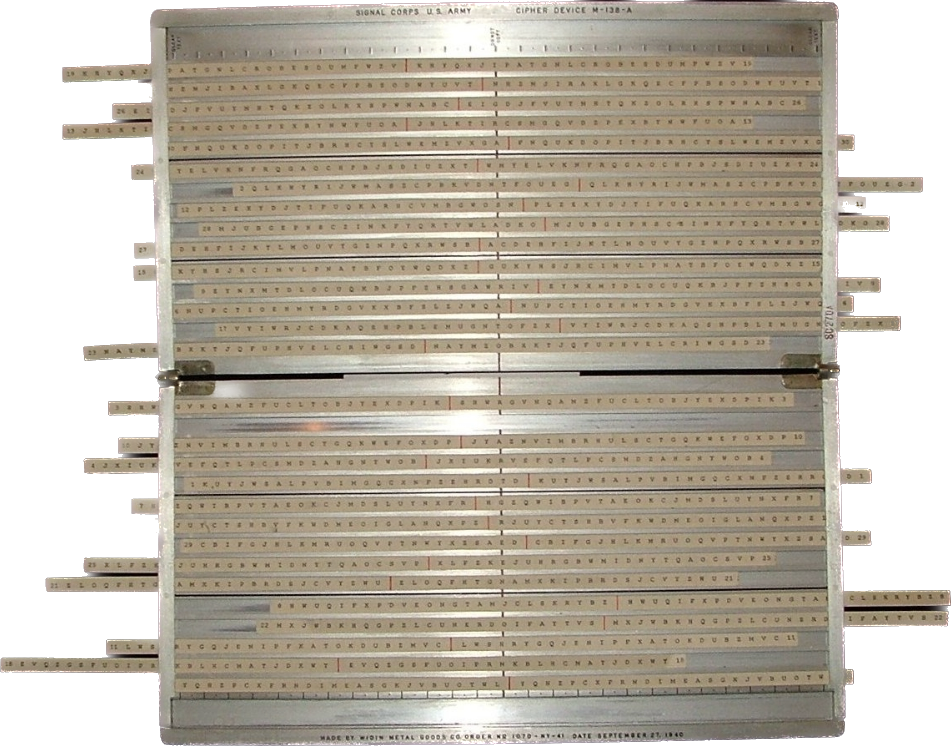
- A further evolution, the M-138A, was used from 1935 to 1942. It consisted of 30 paper strips sliding on an aluminum frame. It was compatible with the M-94 if used with the same alphabets. Its greater keyspace and the fact that the alphabets could more easily be changed made it more secure than the M-94.
- Starting in April 1942, the M-94 was progressively replaced by the M-209 as units became available. A much more complicated pin & lug rotor device developed by Boris Hagelin, the M-209 was used throughout the Korea War.